Latehar (Jharkhand) [India], September 24: Tourism campaigns are often measured in footfall numbers. Govind Pathak, founder of Latehar Tourism, measures his differently — in the number of local drivers now working as trained guides, in the artists whose Sohrai paintings reach new audiences, and in a district slowly shedding a decades-old label as Naxal-affected territory.
Sri Pathak’s tourism model treats Netarhat, Betla, Lodh Falls, Mahuadanr, Sarju Valley and Mirchaiya Falls not merely as attractions to be marketed, but as assets to be protected and shared responsibly.
That distinction shows up most clearly in the people his initiatives have brought into the tourism economy and it is what separates Latehar Tourism from a conventional travel operator.
About Govind Pathak & Latehar Tourism
Govind Pathak founded Latehar Tourism with a vision that extends well past arranging trips: connecting travel with environmental protection, local culture, employment generation and genuine community participation. Over time, the organisation has become closely associated with the district’s changing identity working alongside local drivers, hotel operators, artists and district administrations to open up destinations across Latehar and neighbouring Simdega and Gumla, while keeping the economic and cultural benefits rooted in the communities that host these travellers.
Chief among Pathak’s initiatives is a program that trained more than 100 local drivers as tourist guides equipping them with skills in tourist communication and hospitality, safe vehicle operation, first aid and emergency response, local history and culture, environmental protection and responsible tourism practices.

The initiative reframed a transport job as a professional, dignified livelihood, while giving visitors guides who bring genuine local knowledge to every trip, rather than relying on generic itineraries.
The ripple effect extends well beyond the drivers themselves. Hotel operators, vehicle owners, local artists and small businesses across Latehar now find themselves part of an expanding tourism economy one Pathak has deliberately kept from concentrating only in urban centres or large operators. Every tourist route built by Latehar Tourism is, in effect, a small distributed economy of local livelihoods.
Cultural preservation runs parallel to this economic push.
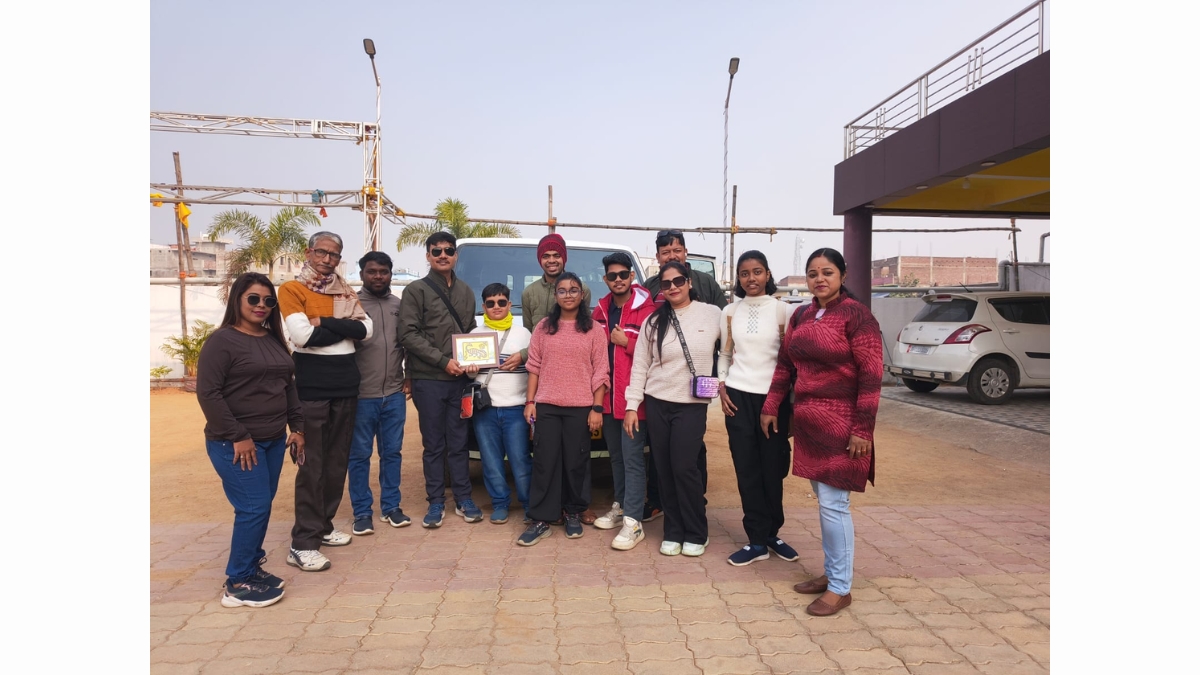
Workshops on Sohrai painting, one of Jharkhand’s defining folk-art traditions, have introduced tourists and students to the craft, with finished artworks gifted to visitors and recognition directed back to the artists who made them. In doing so, Latehar Tourism has turned cultural exposure into a two-way exchange visitors gain insight into tribal heritage, while local artists gain visibility and support they might not otherwise receive.
Environmental stewardship is built into the visitor experience itself, not treated as an afterthought. The Tree Raksha Bandhan campaign has tourists tying protective threads around trees along the Netarhat-Betla stretch as a conservation pledge, while the “*One Journey–One Contribution” initiative encourages every visitor to plant a tree in Netarhat. Single-use plastic has been phased out in favour of reusable steel water bottles, and regular cleanliness drives bring together local guides, hotel operators and tourists around a shared responsibility for the places they all depend on.

Founder Sri Pathak’s efforts haven’t stopped at Latehar’s borders. In collaboration with the Simdega district administration, Latehar Tourism has introduced tour packages covering Tapkara Dam, Gobarsili, Palkot Wildlife Sanctuary and Anjan Dham extending the same community-first model to a neighbouring district that has largely remained absent from mainstream tourism circuits until now.
The partnership illustrates how tourism organisations and local governments, working together, can bring overlooked destinations into public view far more effectively than either could alone.
What emerges from this body of work is a model of tourism where economic upliftment, cultural respect and environmental responsibility are treated as inseparable not competing priorities to be balanced, but a single approach to how travel should function in a region still building its identity beyond conflict.
For Govind Pathak, the goal isn’t simply attracting tourists to Jharkhand’s landscapes. It’s ensuring that when they arrive, the benefits economic, cultural and environmental stay with the people who call the region home.
Through Latehar Tourism, that principle is steadily reshaping how Latehar, and increasingly its neighbouring districts, are seen by the rest of India.
If you object to the content of this press release, please notify us at pr.error.rectification@gmail.com. We will respond and rectify the situation within 24 hours.