
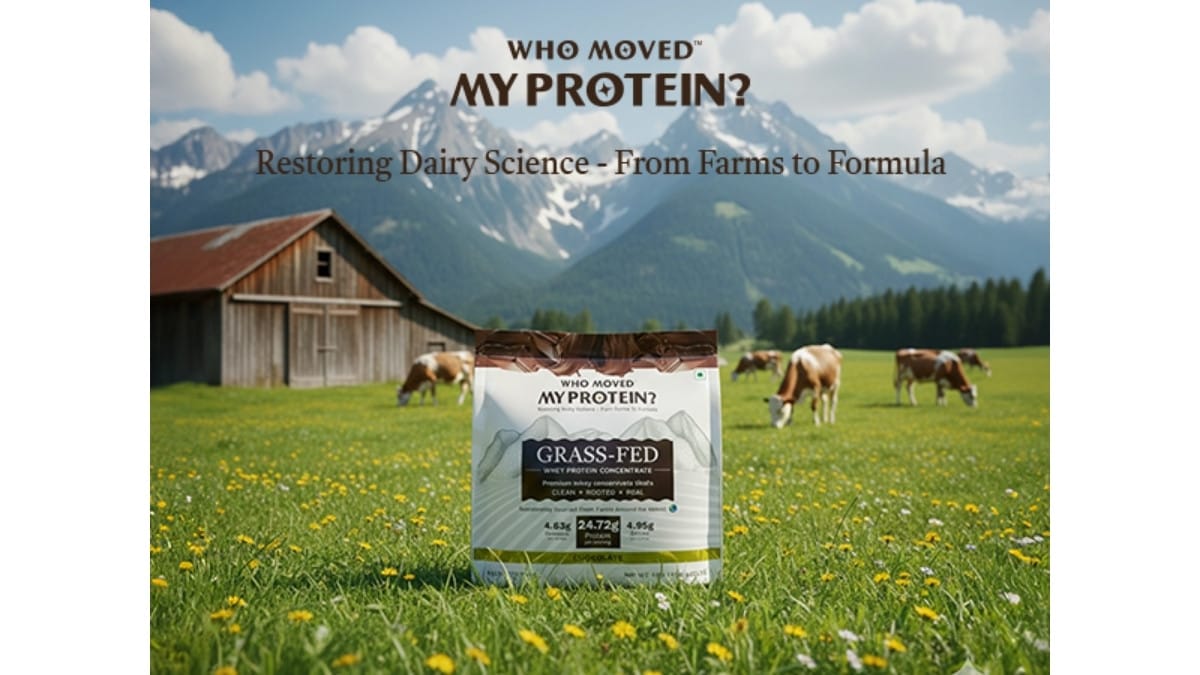
New Delhi [India], January 30: Protein has become a symbol of modern performance, convenience, and health. But Who Moved My Protein? is built around a different and more challenging question: what happens before protein ever reaches the shaker bottle? By focusing on farming systems, animal welfare, and environmental impact, the brand positions protein as part of a much larger ethical food conversation, not just a fitness product.
Rethinking Where Protein Begins
At the heart of Who Moved My Protein? is a clear contrast between grass-fed and factory-fed dairy models. Grass-fed systems allow cows to graze naturally and follow biological feeding cycles, supporting animal health and preserving the integrity of milk from the very beginning. The brand argues that ethical sourcing is not only about compassion but also about nutrition, since stressed animals and artificial diets affect the foundation of protein long before any processing takes place.
Factory-fed operations, by comparison, rely on confinement, grain-heavy diets, and production schedules designed to maximize output. While these systems increase short-term efficiency, Who Moved My Protein? highlights how they also place heavy strain on animals and land, creating hidden costs that are rarely reflected on product labels.
Ethics and Environment Are the Same Issue
For Who Moved My Protein?, sustainability cannot be separated from animal welfare. Industrial dairy typically depends on energy-intensive housing, imported feed, and long transportation chains, all of which increase environmental pressure. The brand promotes an alternative approach in which technology supports natural processes rather than replacing them.
This philosophy is represented by the brand’s “Green Factory” concept, a model where responsible processing protects milk quality without forcing animals beyond natural limits. Innovation, in this framework, is not rejected but guided by ethical intent, ensuring that productivity does not come at the expense of ecosystems or animal well-being.
Why Intensive Systems Struggle Long-Term
Who Moved My Protein? also questions whether volume-driven dairy models are sustainable over time. When biological systems are pushed too far, problems tend to surface in declining animal health, rising medical intervention, soil fatigue, and growing public concern over farming practices. These outcomes, the brand suggests, are not accidents but signals of systems built around extraction rather than balance.
From a business perspective, this instability creates risk. Regulatory pressure, environmental limits, and shifting consumer expectations all threaten production models that depend on constant expansion. By contrast, farming systems that prioritize animal welfare and land stewardship are more likely to remain viable in a changing climate and social landscape.
Protein as Part of Food Ethics
Rather than treating supplements as separate from everyday food, Who Moved My Protein? insists protein should meet the same ethical standards as milk, meat, and produce. The brand encourages athletes and health-conscious consumers to think beyond performance claims and consider how nutrition choices affect animals, farmers, and local environments.
This approach places the brand within a broader ethical food movement that demands transparency across supply chains. Instead of asking only what protein does for the body, Who Moved My Protein? asks what protein requires from the world in order to exist.
Changing Industry Through Story
What distinguishes Who Moved My Protein? within sustainability conversations is its use of storytelling to explain complex agricultural systems. Through a modern fable, the brand translates technical issues into human experiences of care, neglect, and responsibility. This narrative approach reflects a growing recognition that people connect more deeply with stories than statistics when making ethical decisions.
By making dairy production visible and relatable, the brand invites consumers to participate in shaping better systems rather than remaining disconnected from them.
The Future Will Be Value-Driven
Who Moved My Protein? does not claim to be the only answer to industrial dairy’s challenges, but it positions itself as part of a collective shift toward responsible nutrition. Its message is that ethical protein emerges when farming practices, manufacturing methods, and consumer choices align around long-term stewardship.
As environmental concerns and ethical expectations continue to reshape food industries, the brand argues that the future of protein will be defined less by how much can be produced and more by how responsibly it is made. In that future, asking where protein comes from will be standard practice, not activism, and values will be as important as performance in defining what good nutrition truly means.
If you object to the content of this press release, please notify us at pr.error.rectification@gmail.com. We will respond and rectify the situation within 24 hours.